Article
From Innovation to Governance: A Defining Moment for the UAE
18 October 2025
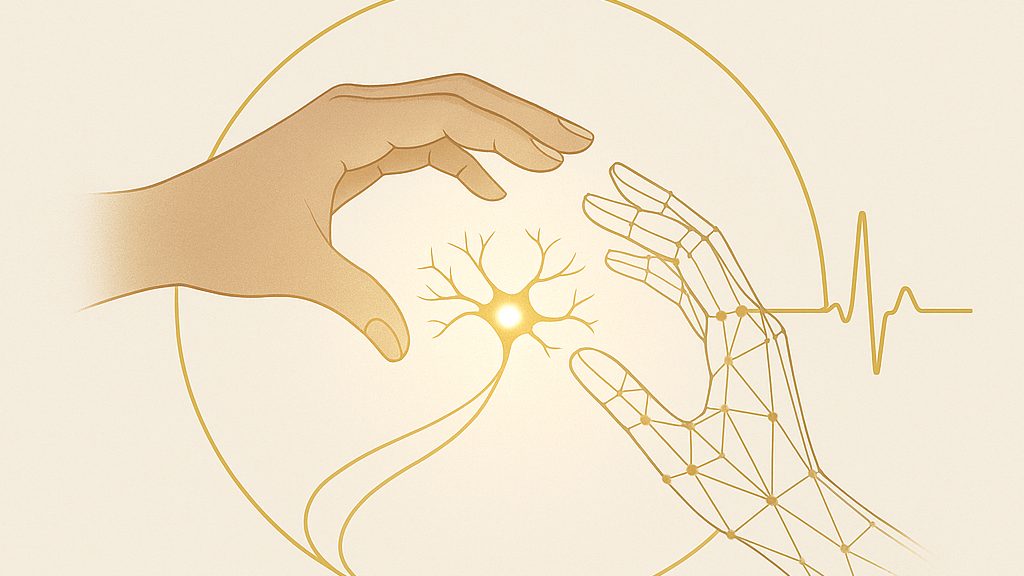
In October 2025, the Department of Health – Abu Dhabi (DoH) released the Responsible Artificial Intelligence Standard (V1) – the most comprehensive AI governance framework in the region’s healthcare sector to date.
For the first time, Abu Dhabi has formalised what “responsible intelligence” looks like in practice: AI systems must be ethical, explainable, equitable, and human-centred. They must protect privacy, preserve human oversight, and demonstrate safety and robustness across their lifecycle.
This isn’t just a compliance document, it’s a blueprint for trust.
The Standard lays out clear pillars:
- Core Foundations: Human-centred design, safety, explainability, accountability, sustainability.
- Data Management: Validated sources, provenance tracking, privacy-by-design, and lifecycle documentation.
- AI Risk Management: Classification, mitigation, and continuous monitoring through a unified protocol.
- AI Literacy: Mandatory training for clinicians, data scientists, and administrators to build system-wide competence.
By codifying these principles, the DoH is sending a global signal: that healthcare innovation in Abu Dhabi will not advance at the expense of ethics, fairness, or patient sovereignty.
Why It Matters for Longevity Medicine
Longevity medicine thrives on integration – multi-omics, digital twins, advanced imaging, continuous biometrics. The complexity of this data ecosystem makes AI indispensable. It helps clinicians move from reactive care to predictive intelligence: identifying micro-signatures of aging, stratifying risk, and tailoring interventions at molecular resolution.
But such power can amplify bias as easily as it uncovers truth.
Without proper governance, models trained on non-representative data can misclassify, misinform, or marginalise entire populations. In the context of aging and preventive medicine, that means inequities could be embedded into algorithms – not eliminated by them.
The new Responsible AI Standard addresses this directly: every dataset must reflect population diversity, undergo bias audits, and remain fully traceable. Every AI tool must operate under human-in-the-loop supervision. Every decision must remain explainable to clinician and patient alike.
For longevity clinics, this translates into a new operational maturity, one that fuses biomedical innovation with ethical infrastructure.
From Data Intelligence to Human Empathy
AI’s true value in healthcare is not to replace the clinician, but to re-empower them. When algorithms analyse millions of biomarkers in seconds, doctors regain time for the irreplaceable: conversation, empathy, interpretation, and care.
The Responsible AI Standard reinforces this by making human judgment central to every digital process. It demands escalation protocols, override mechanisms, and transparent accountability across the AI lifecycle.
This is not the automation of medicine. It’s the augmentation of wisdom.
The Next Decade: Regulated Innovation as a Competitive Advantage
Far from slowing progress, regulation like the DoH’s will accelerate responsible adoption. By setting clear expectations for fairness, privacy, and transparency, it gives innovators and investors a stable foundation to build upon.
For the UAE’s growing longevity ecosystem, from precision diagnostics to regenerative therapeutics, this governance clarity transforms ethical compliance into competitive edge. It signals to global partners that Abu Dhabi is not just a hub of medical innovation, but a model of responsible intelligence.
Closing Reflection
As we step into the era of AI-driven longevity, the challenge is not whether machines can think but whether we can design them to care.
Healthcare’s next frontier will belong to systems that are not only predictive and precise, but principled. To extend life meaningfully, we must teach intelligence itself to act responsibly. In an age where algorithms can out-diagnose, out-predict, and out-analyze, we must remember: precision without compassion is empty. Artificial intelligence may map the genome, predict aging trajectories, or optimize cell repair – but it cannot interpret a sigh of fear before a test result, or the silence of acceptance after a diagnosis.
The power of AI in longevity medicine lies not in replacing human intuition, but in elevating it. Machines can compute probability. Only humans can define meaning. As the new Responsible AI Standard reminds us, innovation must serve empathy, not eclipse it. Technology is the instrument. We are still the conductors.
#ResponsibleAI #LongevityMedicine #Healthspan #PrecisionMedicine #DoHAbuDhabi #DigitalHealth #AIethics #FutureOfHealthcare #UAEInnovation #DataGovernance