Article
5 Emerging Trends That Will Redefine Preventive Healthcare
3 October 2025
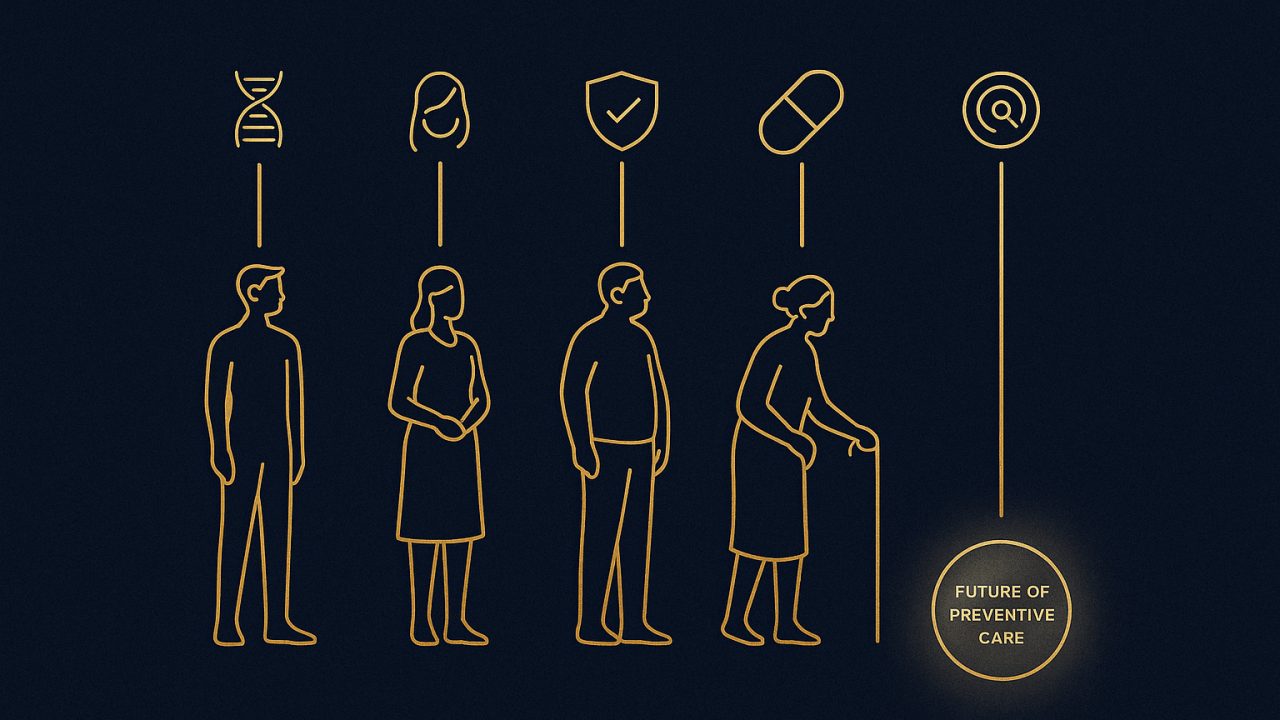
The conversation in healthcare is shifting. Prevention is no longer just about annual checkups and lifestyle advice. Longevity medicine is redefining it – moving from detecting disease early to delaying, and in some cases reversing, the biological processes that drive disease itself.
Here are the emerging trends that will shape the next era of preventive and personalized healthcare:
1. Partial Cellular Reprogramming
- Concept: Partial reprogramming aims to roll back the epigenetic age of cells by resetting their gene-expression profile without erasing cell identity. It typically uses subsets of Yamanaka factors (e.g., OSK – Oct4, Sox2, Klf4), avoiding c-Myc which is linked to tumorigenesis.
- Evidence: In murine studies, cyclic induction of OSK extended remaining lifespan by up to 9 months (Lu et al., 2020) and improved frailty markers such as grip strength and metabolic resilience. More recent research in 2024–25 shows improvements in organ-specific function, but safety challenges remain – notably tumorigenic potential, immunogenicity from viral vectors, and off-target epigenetic resets.
- Clinical Translation: Ophthalmology is expected to be the first frontier – age-related macular degeneration and glaucoma represent “local delivery” opportunities where AAV-mediated OSK can rejuvenate retinal ganglion cells without systemic risk. This reduces oncogenic exposure while allowing functional readouts (vision improvement).
- Strategic Implication: If proven safe, partial reprogramming could shift longevity medicine from supportive “maintenance” strategies into actual cellular rejuvenation.
2. Next-Gen Biological Age Clocks
- Concept: Biological clocks quantify “functional aging” rather than chronological time. First-generation methylation clocks (Horvath, Hannum) measured DNA methylation patterns correlated with age. Second-generation clocks (PhenoAge, GrimAge) incorporated mortality and disease associations.
- Advances:
- Application: These tools are rapidly moving from academic use into clinical trial endpoints (to measure efficacy of anti-aging therapies) and insurance risk stratification (predicting morbidity).
- Strategic Implication: As reliability improves, these clocks could replace crude markers like “chronological age” in both healthcare and corporate wellness settings.
3. Senolytics (Clearing Senescent Cells)
- Concept: Senescent cells accumulate with age and secrete a harmful mix of cytokines, proteases, and inflammatory mediators (the SASP – senescence-associated secretory phenotype). Senolytics selectively eliminate these dysfunctional cells to reduce inflammation and improve tissue function.
- Clinical Frontline: UNITY Biotechnology’s UBX1325 (a BCL-xL inhibitor) has made ophthalmology the lead indication, showing improvements in visual acuity for diabetic macular edema. Unlike traditional anti-VEGF drugs, UBX1325 targets the root cause (senescent endothelial cells). Phase 2b data suggest comparable efficacy to anti-VEGF, with durability advantages.
- Pipeline: Beyond ophthalmology, senolytics are being tested in osteoarthritis (intra-articular injections), pulmonary fibrosis, chronic kidney disease, and even Alzheimer’s. Natural compounds (e.g., fisetin, quercetin) are also in pilot trials but face challenges of bioavailability and specificity.
- Strategic Implication: If validated, senolytics could become a new disease-modifying class of therapies for age-related conditions – not just symptom relievers.
4. Always-On, Medical-Grade Sensing at Home
- Concept: Moving beyond wearables for “fitness tracking” into continuous, regulated medical monitoring. Unlike Fitbits and Apple Watches, these devices are undergoing FDA review and clinical validation.
- Milestone: In July 2025, the FDA cleared the first over-the-counter cuffless blood-pressure wristband. This breakthrough points to a future of unobtrusive cardiometabolic monitoring.
- Trajectory: Next approvals are expected for continuous glucose monitors (CGMs) that integrate into standard watches, arrhythmia detection beyond Apple Watch’s AFib alerts, and multi-sensor respiration monitors for COPD and sleep apnea.
- Implication: Always-on medical sensing creates a real-time health infrastructure that could feed data directly into electronic medical records, longevity programs, and even insurance underwriting models.
- Strategic Implication: Clinics may shift from episodic testing to continuous healthspan dashboards, making proactive interventions far earlier.
5. Epigenetic/Epigenomic Interventions (Beyond Reprogramming)
- Concept: Targeting the epigenome directly without full reprogramming. These methods aim to “tune” gene expression rather than reset identity.
- Strategies:
- State of Play: Most interventions remain in animal studies or very early human feasibility trials. Unlike senolytics, these have not yet reached large Phase 2 programs.
- Strategic Implication: Epigenetic therapies could one day offer personalized tuning of cellular function, giving precision interventions without permanent DNA alteration
Preventive healthcare will no longer just mean early detection – it will mean early correction. Programs will move from generic to deeply personal, giving people the tools to live not just longer, but better.
Which of these trends excites you most: tracking biological age, rejuvenation therapies, or real-time monitoring?
#LongevityMedicine #PreventiveHealthcare #PersonalizedWellness #FutureOfHealthcare #Healthspan